
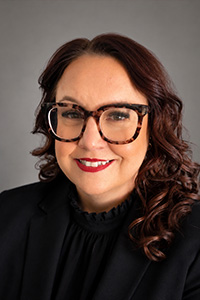
Bachelor of Social Science (Psychology), 2000 PhD, 2026
Alumni recognised for leadership in suicide prevention and first responder mental health
At 21, Annie Fardell Hartley was working as an intern psychologist in Dubbo, sitting alongside people experiencing some of the darkest moments of their lives.
Many were struggling with suicidal thoughts. Some were recovering from suicide attempts. For Annie, those early conversations would shape a career spanning more than two decades and inspire a lifelong commitment to suicide prevention, mental health and community connection.
Today, Annie is one of Australia's most respected voices in suicide prevention and first responder mental health, balancing leadership roles in research, policy, clinical practice and community advocacy. Yet despite the breadth of her work, she remains focused on a simple principle: helping people feel seen, heard and connected.
"The most fulfilling aspect of my work is witnessing the moment someone feels seen and heard, often after believing they were invisible or a burden," Annie says.
A Charles Sturt University graduate who completed a Bachelor of Social Science (Psychology), followed later by a Master's degree and PhD, Annie has spent her career working across government, not-for-profit and private sectors. Her expertise spans trauma, suicidality and emergency service mental health, with a particular focus on rural and regional communities.
The path was never driven by titles or recognition. Instead, it grew from witnessing people's capacity to recover, even in the most difficult circumstances.
"Witnessing people return from profound distress and rebuild their lives became the driving inspiration behind my work," she says.
That inspiration has led Annie into diverse and influential roles. As Principal Psychologist (Systems) with NSW Ambulance, she advises on suicide prevention, trauma and mental health across one of Australia's largest emergency service organisations. Her days can include responding to critical incidents, supporting teams, conducting research, advising government and providing care to people in crisis.
Alongside her professional roles, Annie has remained deeply committed to community-led initiatives. She has helped establish projects including Connected Communities Project Inc., the Central West LGBTIQA+ Rainbow Alliance and local Walk Toward Hope events for World Suicide Prevention Day.
For Annie, meaningful change does not happen through systems alone.
It starts with communities having the confidence and support to care for one another.
Her research has also contributed to a deeper understanding of suicide prevention in regional Australia. Through her doctoral studies at Charles Sturt, Annie explored how rural young people experiencing suicidal distress engage with social media, identifying opportunities to recognise warning signs and intervene earlier.
The research reflected a theme that has remained consistent throughout her career: listening closely to the lived experiences of others.
Being able to pursue that work while balancing full-time employment and raising a family remains one of her proudest achievements. She credits the support of her supervisors, particularly Dr Judith Crockett, and the willingness of research participants to share their stories.
Seeing her finished PhD bound and complete was a moment she describes as a significant personal accomplishment.
Annie's connection to Charles Sturt stretches back to her student days in Bathurst. Memories of life at Heath Towers, neuroscience laboratories and inspiring lecturers remain vivid decades later, highlighting the role the University played in supporting her professional journey.
Her commitment to helping others has also been shaped by personal experience. Losing her father at 14 taught her an enduring lesson about resilience and hope, one she continues to carry into every aspect of her work.
"I think of it as lending people some of my hope until they find their own again," she says.
It is a philosophy that captures both Annie's career and her legacy. Whether supporting first responders, leading research, shaping policy or walking alongside people through crisis, her work continues to demonstrate the power of human connection and the difference one person can make when they choose to help others find a way forward.