
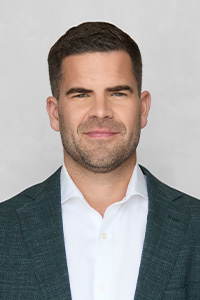
Bachelor of Clinical Practice (Paramedic), 2011
Caring for the vulnerable: A career built on service
When Jordan Emery reflects on his career, it is not the titles or accolades that stand out most. It is the people.
For more than two decades, the Charles Sturt alumnus has dedicated his life to caring for others during some of their most vulnerable moments. From responding to medical emergencies as a frontline paramedic to leading more than 8,000 staff as Chief Executive Officer of Ambulance Victoria, Jordan's commitment to service has remained constant.
"Being a paramedic has been a singular privilege over my adult life," Jordan said. "The opportunity to care for others, especially when they are most vulnerable, is profound and humbling."
It is a philosophy that has guided every stage of his career and one that recently saw him recognised as the recipient of the 2026 Charles Sturt Alumni of the Year Award for Professional Excellence. The award celebrates alumni who have made a significant and lasting contribution to their profession, industry and community.
Foundations for a life of service
Jordan's journey began at Charles Sturt University in Bathurst, where he completed an Associate Degree in Clinical Practice (Paramedic) in 2008 before graduating with a Bachelor of Clinical Practice (Paramedic) in 2011.
The experience laid the foundations for a career that would span clinical practice, executive leadership, higher education and international humanitarian work.
"From practical and simulation labs to clinical placements, Charles Sturt really helped shape my early career as a paramedic," he said.
"I was fortunate to have excellent academic staff who brought decades of industry experience to their roles and that really showed in their teaching and our learning."
Those early lessons would prove invaluable as Jordan progressed through a range of clinical, leadership and executive positions across Australia.
Leading with purpose
Jordan's career has taken him from intensive care paramedic roles to senior leadership positions with NSW Ambulance, Ambulance Tasmania and now Ambulance Victoria, one of the world’s largest ambulance service.
While his responsibilities have grown significantly over the years, he believes the core purpose of his work has never changed.
"I feel a deep sense of responsibility to continue supporting our paramedics, clinicians and first responders to deliver world-class care right across the state of Victoria," he said.
For Jordan, leadership is ultimately about enabling others to do their best work and ensuring communities receive the care they need when it matters most.
His contribution to the profession extends beyond operational leadership. He also serves as an Adjunct Associate Professor at the University of Tasmania and as a Board Director of the Council of Ambulance Authorities, helping shape the future of emergency healthcare and paramedicine across Australia and New Zealand.
In recognition of his impact on the sector, Jordan was awarded the Ambulance Service Medal in the 2024 King's Birthday Honours.
A global perspective
In 2016, Jordan stepped away from paramedicine to take on a very different challenge.
Relocating to New York City, he worked in global mental health for a not-for-profit organisation delivering community mental health services in East Africa.
The experience broadened his understanding of healthcare and reinforced the importance of supporting vulnerable communities, regardless of geography or circumstance.
"The privilege to provide different care in different settings continues to shape my thinking and leadership as the CEO of Ambulance Victoria," he said.
The opportunity to work across cultures and health systems gave Jordan a deeper appreciation of the universal importance of compassion, access to care and human connection.
Lessons from the frontline
Like many first responders, Jordan's career has exposed him to situations that test resilience and emotional endurance.
Throughout those experiences, he has gained a profound understanding of the factors that influence wellbeing and life's opportunities.
"I'm always reminded of the incredible fortune of growing up in a family that is safe, loving and secure," he said.
"As a paramedic, you quickly learn the profound importance of that on people's overall wellbeing, especially when you see the lifelong impact of violence, poverty and harm on individuals and how this can limit them from achieving their full potential."
Jordan is equally open about the personal impact that emergency service work can have.
"I have been impacted by the trauma of the work we do," he said. "I've also been reminded of the importance of taking care of your mental health and wellbeing, and the power of post-traumatic growth, showing that we can live more full and happy lives even after periods of hardship."
These insights have influenced not only how he approaches leadership, but also how he supports the wellbeing of those working on the frontline.
Along the way, Jordan has been supported by mentors who helped shape both his professional and personal development.
Some were experienced paramedics and intensive care clinicians. Others were frontline leaders who demonstrated the importance of caring for teams as much as patients.
"I was fortunate enough to know some paramedics throughout my early childhood who I very much looked up to," he said.
Their example inspired him to pursue a career dedicated to helping others, a path he now encourages others to consider.
For anyone considering a career in paramedicine, Jordan believes the greatest reward lies in the trust placed in those who answer the call for help.
"Being a paramedic is a wonderful privilege, but it is precisely that, a privilege," he said.
"People ask for your help, trust you completely and let you into their homes and lives, often because they are scared or extremely vulnerable.
"I would encourage anyone committed to their community and caring for others to pursue this career. It has been rewarding beyond measure."
Today, whether leading a major health organisation, mentoring future professionals or reflecting on the lessons learned throughout his career, Jordan remains guided by the same principle that first drew him to paramedicine: caring for people when they need it most.