Bachelor of Veterinary Biology/Bachelor of Veterinary Science (Honours), 2010
From childhood pet lover to pet nutrition pioneer
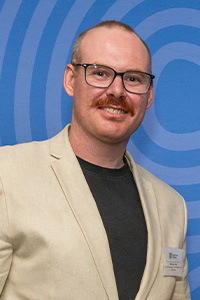
When Dr Matthew Muir received his first dog, Jake, for his third birthday, it sparked a lifelong fascination with animals that would ultimately shape an award-winning career in veterinary medicine, nutrition and sustainable food systems.
Today, the Charles Sturt University alumnus is helping transform the way Australians think about pet health as co-founder of Lyka Pet Food, while advocating for a more sustainable approach to animal wellbeing. His contribution to the veterinary profession and pet nutrition industry has earned him the title of 2026 Charles Sturt Alumni of the Year for Innovation, Entrepreneurship and Creativity.
For Matthew, however, success has never been defined by awards.
"This award is a reminder to me, and hopefully an inspiration to others, that when you take time to think deeply, follow your passion, stay curious, care for yourself and care for those around you, animals included, you can achieve far more than you initially believe."
A curiosity that started early
Long before he became a veterinarian, entrepreneur and researcher, Matthew was simply a child who loved animals.
"I was a serious animal lover from the very beginning, and I was given my first dog, Jake, for my third birthday," he said. "From there, I grew up with a menagerie of pets and spent much of my childhood on farms or reading books about animals, nature and pet health."
His parents encouraged that passion, while his grandparents nurtured his fascination with biology, ecosystems and the natural world. Those early influences sparked a broader curiosity about the connections between animal health, food production, environmental sustainability and human wellbeing.
That curiosity would become a defining feature of both his studies and career.
Building something new at Charles Sturt
Matthew graduated in 2010 as part of the inaugural cohort of Charles Sturt University's Bachelor of Veterinary Biology and Bachelor of Veterinary Science program in Wagga Wagga.
Being among the first students to complete the degree gave him a unique experience and a strong sense of purpose.
"Being part of the inaugural veterinary class felt special because there was a strong sense that we were building something together, supported by people who genuinely wanted us to become capable, practical and thoughtful veterinarians," he said.
The University's applied approach to learning, combined with strong industry connections and real-world experience, helped prepare graduates to tackle complex challenges across the veterinary profession. For Matthew, those foundations continue to influence his work today.
"My favourite memories of studying at Charles Sturt are the people, my fellow alumni, our teachers and leaders, and the wider veterinary community that rallied around us to teach us in such an applied setting," he said.
Looking beyond treatment
After graduating, Matthew worked across rural mixed-animal practices in Australia and the United Kingdom before moving into emergency veterinary care in London. The experience exposed him to a wide range of animal health challenges, but it also prompted him to reflect on how veterinarians could contribute beyond treating illness.
"Over time, after seeing so much reactive medicine, I paused and reflected on the type of veterinary contribution I wanted to make," he said.
That reflection led him towards integrative and preventive veterinary medicine and eventually to All Natural Vet Care, where he has served as Clinical Director for more than a decade.
Rather than focusing solely on disease treatment, Matthew became increasingly interested in helping animals thrive through prevention, nutrition and long-term health management.
Advancing One Health through nutrition
In 2018, Matthew co-founded Lyka Pet Food, bringing together his expertise in veterinary science, nutrition and sustainability. At its core, the business reflects an approach that recognises the interconnected health of animals, people and the environment.
For Matthew, nutrition is about much more than feeding pets. It is an opportunity to improve animal wellbeing while contributing to healthier and more sustainable systems.
"The most fulfilling part of my work is helping veterinary patients live healthier lives while inspiring their families to think more deeply about their own health too," he said.
His work increasingly focuses on understanding the links between nutrition, disease prevention and environmental responsibility.
"I am especially motivated by integrative and functional approaches, translational insights between canine and human health, and practising medicine through a planetary health lens that prioritises prevention, sustainable nutrition and environmental responsibility."
The approach demonstrates how veterinary medicine can contribute to broader societal challenges, connecting animal care with food systems, sustainability and community wellbeing.
Creating impact through research and leadership
Alongside his clinical and business responsibilities, Matthew has contributed to scientific research focused on canine nutrition and the microbiome. He has also become a regular speaker at veterinary conferences across Australia and internationally.
His commitment to animal health extends beyond companion animals. Matthew has continued his involvement in conservation and wildlife care through volunteer work with the Kenya Wildlife Trust and Taronga Wildlife Hospital.
Together, these experiences reflect a career that crosses the boundaries between clinical practice, research, entrepreneurship, education and conservation.
Redefining what a veterinary career can be
Matthew believes one of the greatest strengths of a veterinary degree is the diversity of pathways it can open. His own journey has taken him from rural practice and emergency medicine to business leadership, scientific research and sustainability advocacy, demonstrating the breadth of opportunities available to graduates.
Looking back, he remains grateful for the community that helped launch his career.
"At our 10-year reunion, I was reminded how much that community felt like family, even after not seeing some people for many years."
For current and future veterinary students, his advice is simple.
"Follow the questions that genuinely interest you, while first cementing broad clinical skills so you remain adaptable and able to change paths as your interests evolve," he said.
Driven by curiosity
From a young boy fascinated by animals to an award-winning veterinarian, entrepreneur and sustainability advocate, Matthew's journey shows the power of curiosity in shaping meaningful change.
By bringing together veterinary medicine, nutrition science, research and environmental stewardship, he is helping improve outcomes for animals while contributing to healthier communities and more sustainable systems. His career demonstrates the real-world impact of a One Health approach and the role Charles Sturt graduates can play in addressing the complex challenges that connect animal, human and environmental wellbeing.