
Adam DeMamiel
Boys to the Bush: The rural blokes connecting troubled youth to better futures
More than three-quarters of the 8.6 Australians who die by suicide every day are male, while males represent 92 per cent of prison inmates and four in five in the juvenile justice system1. It’s a bleak picture that CSU graduate Adam DeMamiel has made his life’s work to turn around, one kid at a time. 1 Australian Bureau of Statistics (2022).
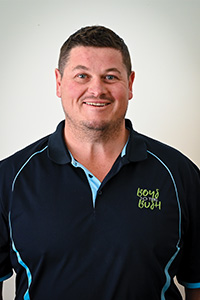
“Everyone deserves to have someone in their lives that inspires them, guides them, and believes in them,” says the CEO and Co-founder of Boys to the Bush (BTTB), a registered not-for-profit, community-based charity focused on preventative and early intervention strategies for disengaged young males.
BTTB is on a mission to help boys become good men. It provides boys with an environment free from the distractions of their everyday situations, surrounding them with positive influences, a sense of belonging, and life-changing opportunities.
“These kids have been through horrific stuff – parents in jail or addicted to drugs, witnessing friends die by suicide, family violence. We’ve had kids tell us they discovered their brother hung at their father’s hands, witnessed their dad shoot their mum, a brother tell of his sisters being exploited by “dad’s bikie mates” . This is their normal, and it’s just not right.”
Adam brings his experience working with disenfranchised youth and personal mental health struggles to BTTB. Raised by community-minded parents and encouraged into teaching by his now wife Ange – both are Charles Sturt graduates – he was drawn to work with what he fondly calls “the ratbags” because he felt could have the most impact. The pair moved to Albury, where Adam developed and delivered specialised programs in high schools for boys with behavioural challenges.
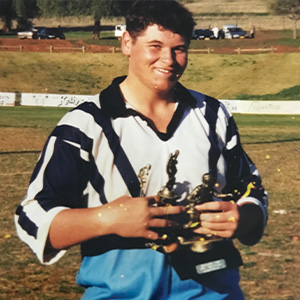
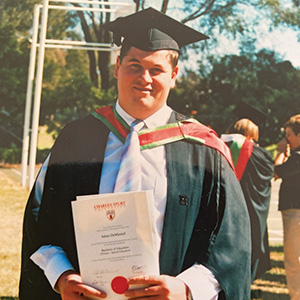
He and BTTB co-founders Richard Leahy and Tim Sanson began running camps in 2017, and in 2019 Adam left teaching to focus full-time on evolving BTTB as its CEO. Today, the company proudly employs around 130 people – some are BTTB program alumni – across nine regional communities in both NSW and Victoria: Forbes, Bathurst, Wagga Wagga Echuca, Young, Leeton, Albury, Dubbo, and Wangaratta.
BTTB’s diverse and ever-growing portfolio of programs now also includes a range of specialised camps, partnerships with schools, and a high-impact one-to-one MENtoring program pairing kids with BTTB employees and community mentors long term.
“We work on individualised outcomes for kids, but there are common themes across all the programs like basic life skills, respect for women, and Aboriginal culture.”
BTTB is also accredited to provide alternative care for kids who would otherwise have been placed in motels, taking a risk on housing them in quality rented homes. Adam says the change in behaviour is extraordinary – far from trashing them, they become houseproud.
“We open their eyes to what their life can be, what they’re worth. Some of these kids can’t even talk, have never been to school. We homeschool them if needed, drawing on the community. We connect them to their village, give them purpose and belonging.”
Across BTTB’s programs, the stories of impact are astonishing.
“There’s one kid from one of our early camps who we should have kicked out about 100 times over the week, but we persevered,” Adam recalls. “We gave him another chance next holidays without much improvement and weren’t sure we were getting anywhere. But the next time his caseworker called was to say he’d been diagnosed with a rare form of bone cancer and it didn’t look good; she was calling me because the doctor had said to contact the most important people in his life. He’d listed me. And that was a real lightbulb moment that what we were doing was something more.”
BTTB supported him through his cancer journey. He defied all odds to fully recover and now works full-time for BTTB, finding his purpose in helping boys like him become good men. It’s one of hundreds of success stories Adam could tell, one of countless lives that have been changed and saved.
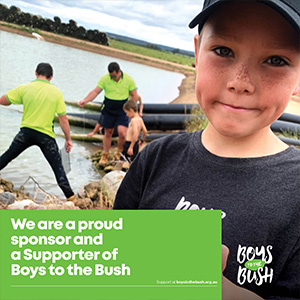
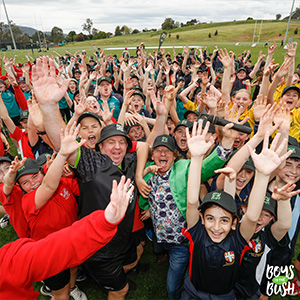
And it’s not only boys that stand to benefit. BTTB's model, founded on deep community engagement, has a remarkable ripple effect.
“Every single person in our communities has the opportunity to be part of the process. It’s not just those working directly with the kids; others donate clothes, cook meals, let us bring them to their farms or businesses,” Adam explains.
“Everyone is buying in. They’re learning why these kids are the way they are and become part of the solution. We’re not only fielding calls from kids we’ve helped and saved but from community members saying how it’s enhanced their lives too.”
Teaching boys to become good men helps break the cycle, so that they won’t beat their future partners or be absent fathers instead they may hold down a job and be good role models to others. In this way, BTTB is helping girls, families, and communities for generations to come.
“It’s a pure early intervention strategy. We’re not magicians or psychologists, but what we’re really good at is, engaging with often unengageable kids, and once we build connection and rapport, we use our networks to help them to thrive.”
Adam is focused on expanding BTTB’s impact, aiming to embed in 30 communities Australia-wide over the next five years. This will place them in front of over 100,000 kids, helping more troubled youths rise above their situations and realise their potential.
“We have a good business model that’s really scalable. We don’t rely on governments or other bodies for ongoing funding – the community sustains it in the longer term. But there are lots of kids out there that need help, so we’re now calling on corporate and philanthropic Australia to help us to help more kids in more communities. As part of this, we’ve created our national campaign day, All on Board.”
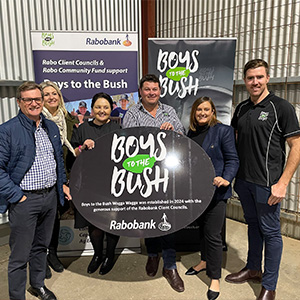
Whatever the future holds as BTTB grows, one thing is certain: the mission remains the same.
“Why we’re doing it – the kids we’re working with – has never changed and never will. We know who we are, who needs help, and how to do it. It’s so bloody simple.”