
Bethany Crowe
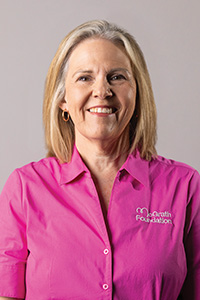
Redefining clinical excellence
As Clinical Nurse Lead, Bethany is co-designing McGrath’s expanded model of care, working with patients, carers, clinicians, priority communities and the non-government sector to translate the vision into clinical practice. It’s the culmination of over 30 years in cancer nursing, leadership and research.
“When our CEO, Holly Masters, announced we’d been invited to expand care to all cancers, there were tears; we were so excited this was finally going to happen,” she says. “We are building on everything we’ve done, working in partnership across the sector. I don’t think any other country could do what we’re going to do; Australia really is leading the way.”
Bethany spent two decades as a specialist breast care nurse and team leader before joining the McGrath Foundation in 2021. Undertaking a Master of Nursing (Leadership and Management) at Charles Sturt, she was considering stepping away from the cancer space when her own ovarian cancer diagnosis at 38 changed everything.
“I experienced first-hand the profound difference specialist nursing roles make and wanted to influence how these roles worked on a bigger scale,” she says.
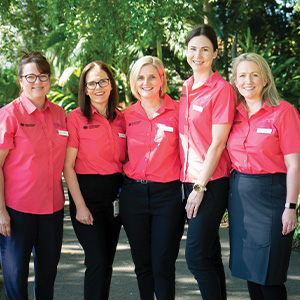
“It’s incredibly rewarding to use the knowledge and skill I’ve gained to practice at the top of my scope and help shape the work of thousands of nurses across Australia.”
Bethany embraces the mentoring of her Charles Sturt lecturers , tailoring every assignment in her Masters to improving cancer care and implementing each one in the workplace. The program’s emphasis on cultural safety has infused everything she has done since.
“What I learned at Charles Sturt has definitely shaped the priority populations-focused model of care we’re about to implement. That inclusivity across every sector of society is so integral to what we do; we’re all working together for the wellbeing of everyone with cancer.”
In practice, that might mean helping rural patients access travel and accommodation, translating complex information, coordinating treatment pathways or offering emotional support.
“It’s about understanding what matters most to each person and helping them live as well as possible at every point in their care. Supporting people in that way is one of the most rewarding and satisfying parts.”