
Campbell Norwood
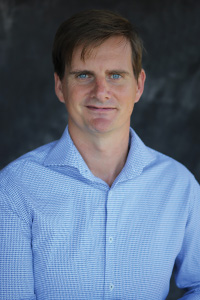
Many paths to success
When Campbell Norwood was a high school student in Bathurst, he’d daydream about his life ahead. Unlike many, he wasn’t seeking fame and fortune. What Campbell wanted most was variety. Since those days, Campbell has studied IT and Business, worked as a financial trader and helped found a world-class diversified trading firm... and he has never lost the desire to experience new things.
How does a boy from Bathurst, who had never heard of Deutsche Bank and JBWere, end up working as a financial trader?
I didn’t do particularly well in high school. I was bored and didn’t enjoy it. I got an ordinary TER and managed to get myself a full-time job in the public service, at Centrelink. I was 18 years old and dealing with heroin addicts and single parents and aged pensioners. It was a great lesson in diversity but after three years, I had to decide if I wanted to pursue a career in the public service and move to Canberra or think about my forever career and study.
I liked computers, so enrolled at Charles Sturt in Bathurst to study IT and worked at Uncle Ben’s in IT support. My boss told me, ‘IT is just a tool. What you really need to understand is business’, so I then switched to a double degree and I loved it. I loved numbers and excelled in finance. I started putting in the work and doing really well. I got a few scholarships along the way, including one with the Commonwealth Bank. I could have stayed in Bathurst to pursue a career with the bank, but I decided to apply for grad jobs in the city at places I’d never heard of and was on SEEK one day when an ad popped up for a trader job with Dutch-based company IMC. I did a maths test, had an interview and got the job.
It was only a few years before you left IMC to help found Tibra in 2006. As the new kids on the financial trading block in Sydney, you set out to challenge and beat some of the world’s most successful trading firms at their own game. How did you find that experience?
Working at IMC’s Sydney office really suited me because if you had a good idea, you got to act on it. Then some people broke away from one of our competitor firms. In those days our part of finance was a niche area so everybody knew each other. They asked if I would like to go and start the new business with them and I didn’t have to think about it too long. I thought, ‘I’m 28. If I lose all my money, I can hopefully start over again. If I’m ever going to do it, do it now.’
I borrowed money to help start the company, so in that way it was quite nerve-wrecking, but there were about a dozen of us early on and we just threw ourselves in the deep end. What we did was quite niche, so other firms weren’t too keen on a new competitor.
To begin with, I ran a trading desk and we got through 2006 and 2007 and then in 2008 the world kind of melted financially with the Global Financial Crisis (GFC). We were 18 months old when Lehman Brothers went down and the whole financial world was at risk. There was a lot of uncertainty but that was a good thing, because it meant there was a lot more trading volume in the market. So, while it was stressful, it ended up being really good for us and we kicked off as a business and expanded quickly after that.
We’ve had periods of great success and periods of enormous stress and at times we have all thought, ‘Why on earth did we do this’, but we’ve learned so much.
What have the past 15 years been like for you in running Tibra?
When we started, we didn’t really know what we were doing. We barely knew what an org chart was and found ourselves going from a dozen people to 200 people in a very short period of time. We learned a lot after that initial volatility of the GFC and had to say, ‘Okay, who does what here?’ So, we put in the management structures and ended up with a lot of roles.
I’ve done just about all of them – General Manager of Europe, head of strategy, head of different trading teams. For the past year, I filled in as CEO for 12 months. When you’re in a medium-sized company, the great thing is you get to fill in wherever there is a need and it’s fun but it also teaches you a lot. One of the greatest lessons I’ve learned is that most things aren’t that complex. You get thrown into things and you figure them out. I was hiring people with twice as much experience as I had but you just do it. You do it together and you have great people to share that load with.
Tibra has had its ups and downs but that fact that we’re here 15 years later is a highlight for me. There’s always a better iteration of your company. There’s always something better you can be doing.
You and the other Tibra founders made the BRW Young Rich List. Was that kind of success part of the dream as a boy growing up in Bathurst?
I’ve always been a dreamer, and I always wanted to try exciting things. I wanted to do bigger, better, more exciting things. Being famous was never part of the picture. To put it in boring economist language, fame has no utility for me. In fact, it has negative utility.
One of my dreams at university was to not have to work full-time and I’ve been so lucky that now I don’t have to, so I’m not going to.
What are you doing with that spare time?
I’m still on the Board of Tibra and we oversee the corporate governance. I am also homeschooling my twin boys in lockdown and my wife is a WIRES volunteer, so right now we have six baby possums here. I love animals and was on the board of a charity called the Elephant Family when I lived in the UK.
I’m also volunteer leader at a local fathering group and spend time mentoring at a local high school. Lockdown has been difficult on people. You hear a lot about suicide and mental health, especially with our young people, and I think the least I can do is try to do something to help with that and be there for them.
I guess you could say I’m interested in supporting the community and environmental causes. I tend to go with what interests me. Life is full of variety – I don’t believe in just doing the same thing.
Would you say that studying at Charles Sturt University prepared you for what was to come?
I didn’t really find out what to do with my life until I started university. I really loved my time at Charles Sturt and it gave me that drive. It gave me something to sink my teeth into and the feedback to see I was doing well. That was a real gift for me.
Half my workmates over the years went to the best schools and fancy universities and I have not felt, even for a second, that I’ve been at any sort of disadvantage being from the country. I think my life experience has been a big advantage and I’ve achieved things I bever thought I would be able to achieve. It shows that there are many, many, many paths to success. Mine’s been through CSU.
CAMPBELL’S ADVICE FOR NEW GRADUATES:
- Get fit, eat fruit and vegetables. If you are a healthy human you'll have more energy and you'll do better in everything in your life. I have been very unfit at times, and you notice the difference!
- Career-wise, stay flexible. Be open to change, look for opportunity, don't get your mind stuck on a particular role. Do a job because you love it, not because your business card is going to look good for your mates. That’s not a motivation.
- Employment is a privilege. You are being paid out of somebody's pocket, whether that’s the taxpayer, shareholders or donors. It is a privilege to get that opportunity, so think ‘Am I worth that payment today?’ Viewing employment as a privilege is a great mindset to have when you show up to work each day.
- Deliver results, not beautiful work. Know what the business requires and the results you need to deliver and do it. You don't need to deliver perfect, but you do need to deliver. Also, know your business, not just your skillset. You’re not an accountant or a programmer, you’re a worker who has to get the job done. The skillset is just the tool.
- People who succeed just do it. They are not smarter. They are not better. They may have no more advantage than anybody else. They just do it. They make it a priority and they get it done. Got a call to make? Got a report to write? Do what it takes and get it done.
- Most things are not really that complex. The Elon Musks of the world, they're the ones sending rockets into space. The rest of us do stuff that's all pretty achievable. Remember, listening and using common sense and intelligence goes a long way, and ask for help when you need it.
- Successful people partner with successful people, so surround yourself with them. Partner with people who have skillsets that complement your own.
- Mental health is really important. Take time for relationships. Take time for your health. Look after yourself physically. Don’t take yourself or anything that you do too seriously. Try not to view a career situation like a life-or-death situation. Try and find the things to be grateful for, ‘I've got a house over my head. I've got food on the table. It's not that bad.’