Richard Price
The power of switching lanes
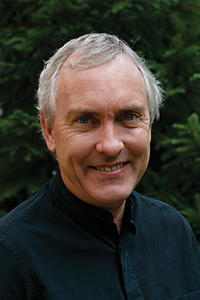
Associate Professor Richard Price has never believed in the concept of staying in your lane. In an impressively varied and non-linear career, it’s a philosophy that’s served him well.
“Switching lanes is great, so long as you’re not a chaotic driver,” Richard laughs. “With each move into unfamiliar territory, you become the naïve ‘newbie’; the outsider. You just need a willingness to set ego aside, listen and learn, and see how connecting your diverse experiences can create valuable new insights.”
Over four decades, Richard has harnessed his talent for bringing people together to drive high-impact collaborations across government, industry, academia and community. He spent the first 15 years of his career in government, where he was a lead architect in drafting and implementing the Primary Industries and Energy Research and Development (R&D) Act 1989.
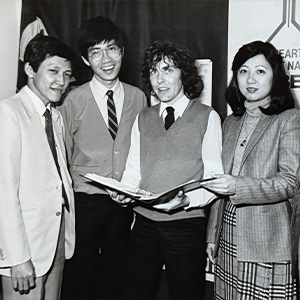
“I see what we did as fundamentally reshaping and securing Australia’s rural R&D landscape,” he says.
“The 15 R&D Corporations that came out of this currently invest close to $1 billion in agricultural research and development annually, much of which flows into regional universities like Charles Sturt to fund innovation and collaboration across the country. This, in turn, benefits regional communities and the national economy alike.”
Shifting gears into research management, Richard co-founded Land & Water Australia in 1990. The trailblazing R&D corporation forged new benchmarks in holistic collaboration, delivering game-changing national research initiatives including the National Dryland Salinity Program and Grain and Graze.
“These programs changed the way we think about effective collaboration in rural R&D,” he says. “They weren’t driven by researchers, but by community and industry. We empowered communities by investing in the local R&D they wanted to do and connecting it into incredibly detailed, high-level national science. Communities understood and championed it, leading to tremendous adoption levels.”
Richard completed his Charles Sturt PhD on the sociology of research during this time – often on the move, earning him the title of the only student Professor Ian Gray had supervised almost entirely over the phone in a fast-moving vehicle. The experience drew all the threads together.
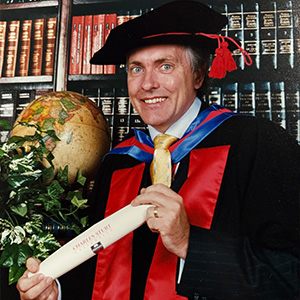
“My Charles Sturt studies stitched together my government, community, science and business roles. It’s shaped everything I’ve done since – internationally, nationally and locally.”
By then, Richard was managing hundreds of researchers and millions in research funding. But having built yet another successful career, he again changed lanes when he founded Kiri-ganai Research, combining his bureaucratic and research management experience to influence better policy.
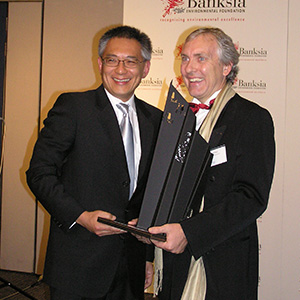
Through Kiri-ganai, he has led numerous national and international projects, including preparing Chinese wetland management guidelines and establishing interjurisdictional committees to enhance environmental policy implementation across China. Collaboration with Wetlands International was key, and Richard’s company has overseen collaborations totalling more than $200 million in government and industry investment, earning a Banksia Foundation Award and two Eureka Prize finalist nods along the way.
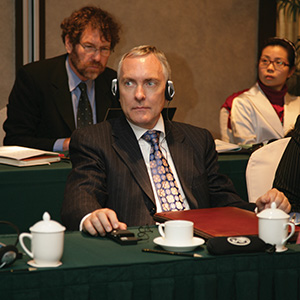
Richard’s next transition was into academia at Associate Professor and Professorial levels, initially leading climate adaptation research at the Australian National University. In 2014, as Director (Research) and Deputy Director of The Australia-Indonesia Centre, he oversaw R&D clusters in energy, health, infrastructure, water and agriculture, including a collaboration improving outcomes for children through the critical first 1,000 days of life. Later, at the Centre for Invasive Species Solutions, he broadened Australia’s national focus on invasive species management from protecting agriculture to safeguarding the environment.
Though his work took him around the world – he spent just 53 nights at home in 2014 – Richard always made time for family, even writing pirate-themed books for his young “grand-pirates”. Now back on home soil in Canberra, he and his wife are guardians of their 12-year-old autistic grandson Eli, who came to live with them at age four.
“I’ve never had children of my own – I inherited my two daughters in their teens – so learning to become a father to Eli has been an incredible privilege. He’s absolutely thriving here, and his intelligence is super scary. We have a lot of fun together.”
Though Richard still runs Kiri-ganai with enviable energy, much of his focus – and profit – goes into his volunteer passion projects. Among them is Kids’ Conference Australia, building capacity in primary and secondary students in Australia, Asia and beyond to advocate for their own learning and play their part as researchers and creators of knowledge and innovation.
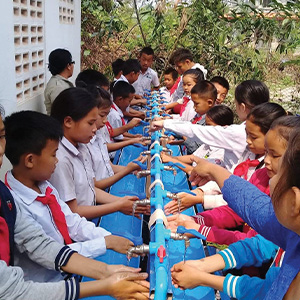
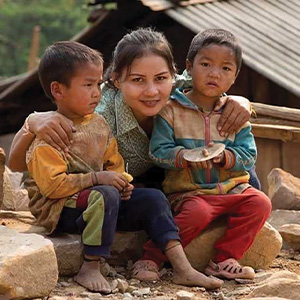
He also gives considerable time to the Soap4Life Foundation, an initiative he cofounded to help stop the spread of infectious diseases in remote villages in Laos. Teaching locals to make soap does more than improve hygiene and public health; when they sell the excess, it also creates an income stream to help lift families from poverty.
These are but a few facets of Richard’s remarkable legacy, changing the world for the better through curiosity, commitment, and refusal to pick one lane.